
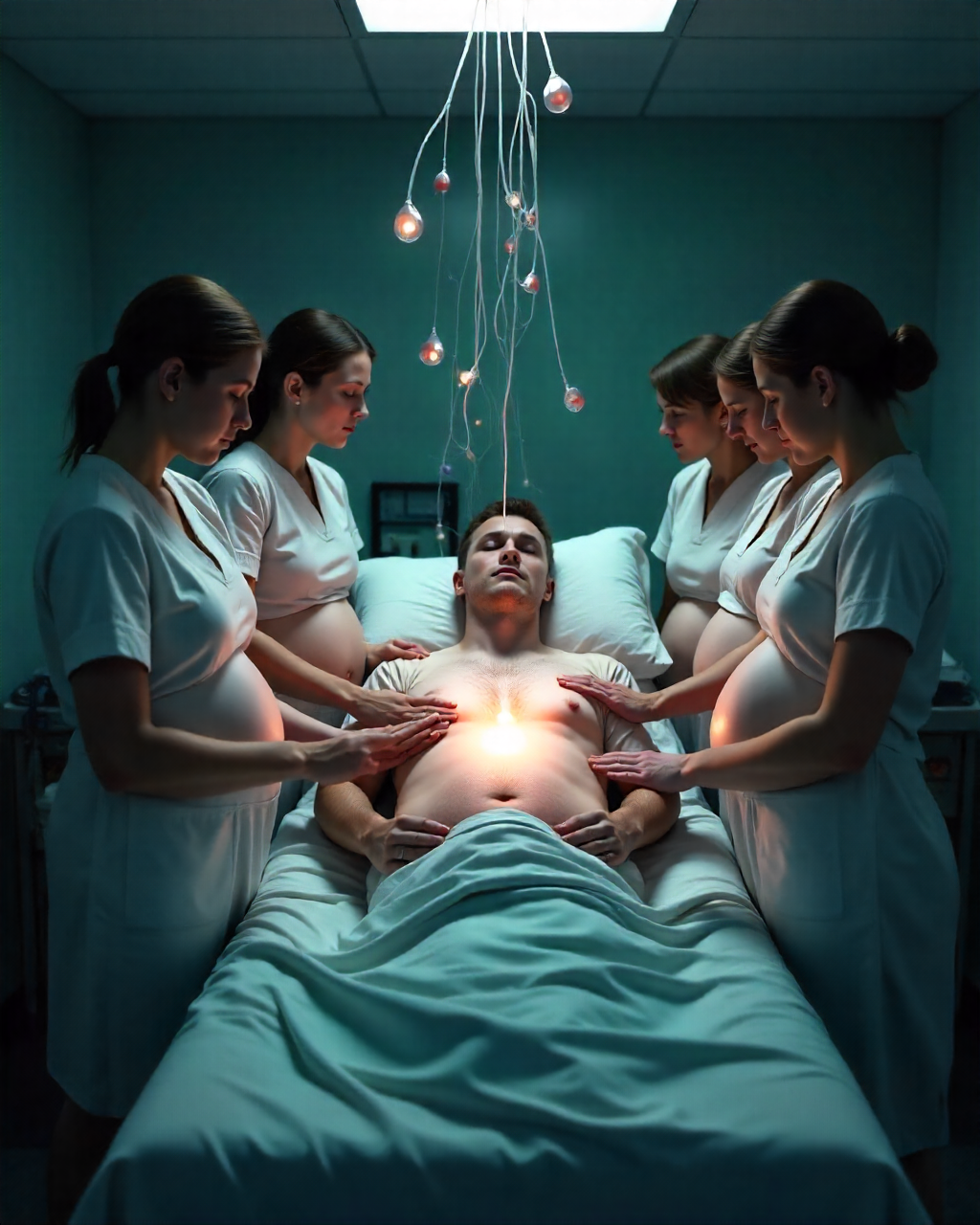
When the first nurse at St. Catherine’s Medical Center in Detroit discovered she was pregnant, no one gave it much thought. Hospitals were spaces where life and death intersected—births, recoveries, and losses unfolded in quick succession. But as the second nurse, then the third, also reported pregnancies while tending to the same unresponsive patient, a subtle unease began to creep through the sterile hospital corridors.
The comatose man, a 29-year-old firefighter named Michael Reeves, had been in a deep sleep for over three years. His body, sustained by machines and routine care, had become a symbol of resilience for the nurses who tended to him daily. They spoke to him during rounds, cleaned his wounds, adjusted his IVs, and whispered goodbyes before dimming the lights. No one imagined his stillness could be anything more than a pause in life’s rhythm.
The first pregnancy was attributed to Nurse Emily Rhodes, a newlywed in her late twenties. She admitted to sexual activity, and the hospital didn’t question further. Then came Dana Lowell, a single nurse known for her quiet professionalism, whose pregnancy left colleagues stunned. When Carla Menendez, the third nurse, also tested positive, Dr. Jonathan Mercer, the supervising neurologist, started to notice something strange. Each nurse had spent at least two months on night shifts assigned to Reeves, with no overlapping schedules or reported incidents. Yet all five were expecting, and none could explain how.
By the time the fifth pregnancy was confirmed, Dr. Mercer had exhausted all rational explanations. Reeves’ tests showed no hormonal shifts, brainwave activity, or signs of autonomic response. Determined to uncover the truth, he installed a hidden camera in Room 312B, placing it behind an air vent and pointing it toward the patient’s bed. The camera was meant to capture every moment of the night shifts—without alerting anyone. He activated the recording, then left it running.
On the third night, the camera captured an event that left Dr. Mercer shaken. The lights flickered, and Reeves’ heart rate spiked as the nurse, Laura Kane, rushed to his side. His body then moved—sitting up briefly, eyes open and clear. He reached out and touched her stomach, causing the monitor to flatline. Laura screamed, and the camera went into static. When Dr. Mercer reviewed the footage the next morning, he reportedly vomited in his office.
Authorities quickly intervened, seizing the camera and relocating both Reeves and Nurse Kane to separate facilities for questioning. The hospital issued a brief statement: “Due to ongoing privacy and legal concerns, St. Catherine’s cannot disclose details about the patient’s or staff’s condition.” However, leaks from the Detroit Police Department suggested Reeves’ condition had shifted. “There were signs of heightened neurological activity,” said an anonymous officer. “We’re not certain what triggered it. All possibilities remain open.”
The nurses involved, now in varying stages of pregnancy, have refused to comment to the media. Dr. Mercer, meanwhile, has been placed on administrative leave and is undergoing psychiatric evaluation after a reported breakdown. Experts remain divided—some argue the pregnancies are mere coincidences, while others speculate about experimental fertility treatments, mass hysteria, or supernatural forces. Yet a chilling theory persists: the five unborn children share identical DNA, matching Reeves’.
An anonymous nurse shared a message on an online forum shortly after the story broke: “He dreams with his eyes open. Sometimes, when I change his IV, I feel warmth, as if someone is breathing through the machines. Maybe he never left.”
Despite Reeves’ transfer to a private facility under state protection, a security guard at St. Catherine’s claimed to see a heartbeat on the old monitor feed two weeks later. The bed in Room 312B—now empty and neatly made—suddenly registered a single, steady pulse before falling silent.



One Comment
https://contentkit.news/miracle-or-horror-the-shocking-case-of-the-comatose-patient-tied-to-five-unexplained-pregnancies-at-st-catherines-hospital/